The path to resilience, growth and sustainability by 2030.
UN Global Compact and Accenture present the 12th study of CEOs worldwide.
CEOs face a highly challenging global context, with the vast majority (93%) experiencing 10 or more simultaneous challenges for their businesses and 87% warning that current levels of adversity will limit achievement of the Sustainable Development Goals (SDGs) , according to the largest study of CEOs on sustainability ever conducted by the UN Global Compact and Accenture. While CEOs are increasingly concerned about these headwinds, nearly all (98%) agree that sustainability is central to their role, a sentiment that has grown 15 percentage points in the last 10 years. of the study.
The 12th UN Global Compact and Accenture CEO Study is based on the views of more than 2,600 CEOs from 128 countries, 18 industries and more than 130 in-depth interviews, making it the largest sample of senior executives, including the largest group of CEOs from the Global South, since its inception in 2007. In the study, CEOs warn of the impact of converging challenges for business and society, from faltering multilateralism and socioeconomic instability to disruptions of the supply chain and the immediate effects of climate change.
"In a world characterized by conflict, energy shortages, rising inflation and the threat of recession, this year's study shows that CEOs do not believe the world is as resilient to crises as we had hoped. Businesses continue to be hit by multiple adversities and challenges.As a result, on a wide range of issues, from climate change to rising social and economic inequalities, business action is currently falling short of ambition and the pace needed to achieve the Sustainable Development Goals by 2030," said Sanda Ojiambo, Under-Secretary-General, CEO and Executive Director of the United Nations Global Compact.
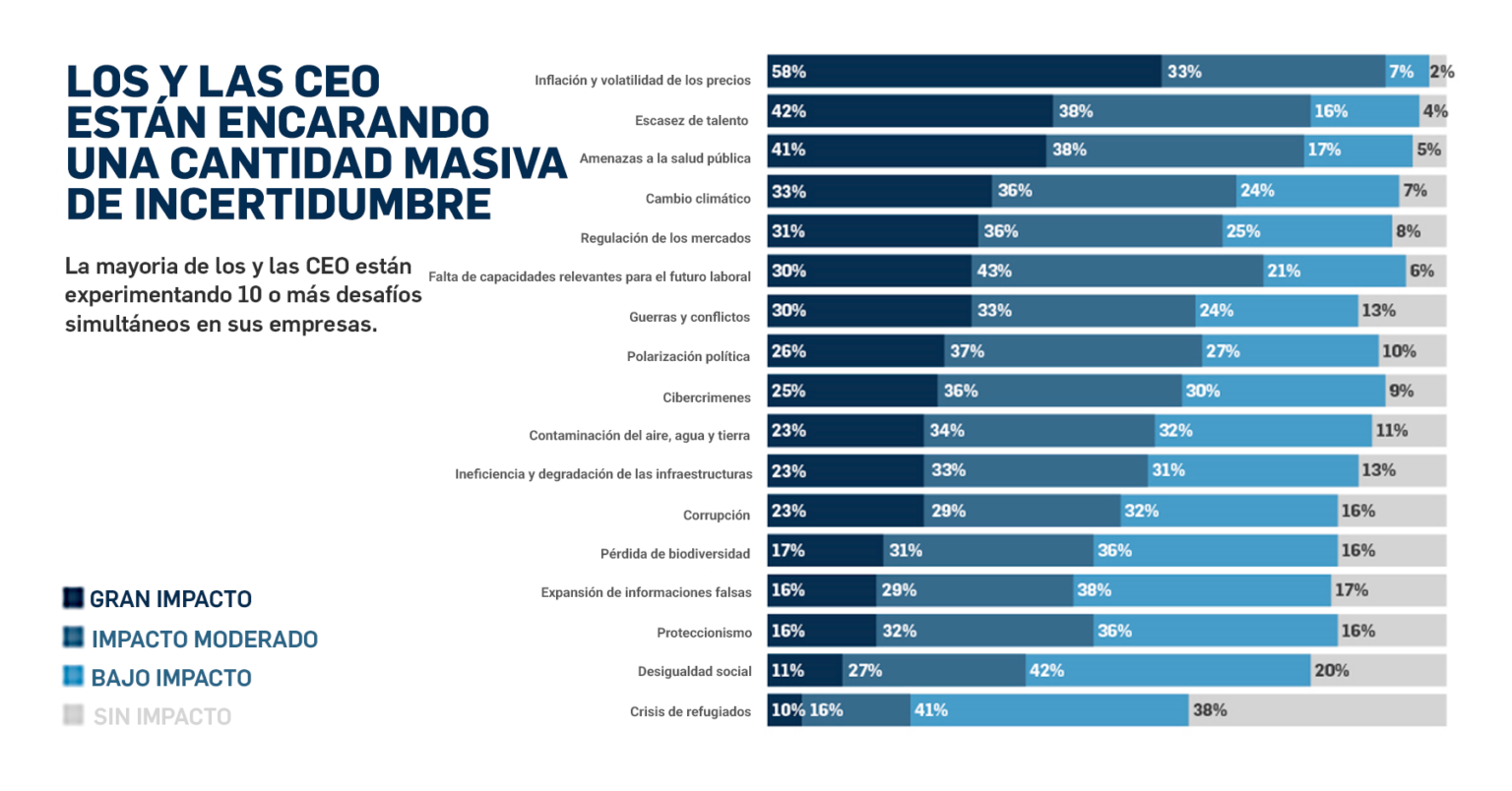
As these challenges mount, CEOs around the world are pointing to issues traditionally considered outside the business sphere—such as climate change or sociopolitical conflicts—as concerns in driving value and impact for all stakeholders. . With just eight years to go to deliver the SDGs, almost half (43%) of CEOs say their sustainability efforts have been hampered by the geopolitical environment, and that number is even higher for those in developing countries (51%). Examining the net zero targets set by the world's largest companies, Accenture also found that almost all will miss their own targets unless they double the pace of reducing carbon emissions by 2030.
However, some CEOs continue to make a big positive impact, bringing value to stakeholders and competitive advantages in their sectors, reshaping the future of sustainable development through innovation and collaboration. Two-thirds of CEOs (66%) say their companies are engaging in long-term strategic partnerships to increase resilience. These leaders are reconfiguring underlying supply chains, reskilling their workforce, reassessing their relationship with natural resources, and reimagining planetary boundaries through technological advances that span physical, digital, and biological solutions.
" Failing to deliver on the promise of the SDGs is a real concern but, at the same time, a huge opportunity for companies that reinvent their businesses and harness sustainability as one of the key forces of change in the next decade," said Peter Lacy . , Global Head of Sustainability Services and Chief Responsibility Officer at Accenture. "CEOs are clearly concerned with resilience, but one leader's resilience is another leader's opportunity for growth. New waves of technology investment and breakthrough innovation can bring the SDGs back within reach, but only if leaders turn to sustainability for resilience to help create new markets, products and services that can correct the current trajectory and drive growth in times of disruption ."
CEOs also identify a clear need to focus on technology to find solutions that address global challenges and drive growth. Leading CEOs are already integrating sustainability into their companies through launching new sustainability-focused products and services (63%), improving sustainability data collection in their value chains (55%), and investing in sources of renewable energy (49%). Almost half (49%) are transitioning to circular business models, and 40% are increasing R&D funding for sustainable innovation .
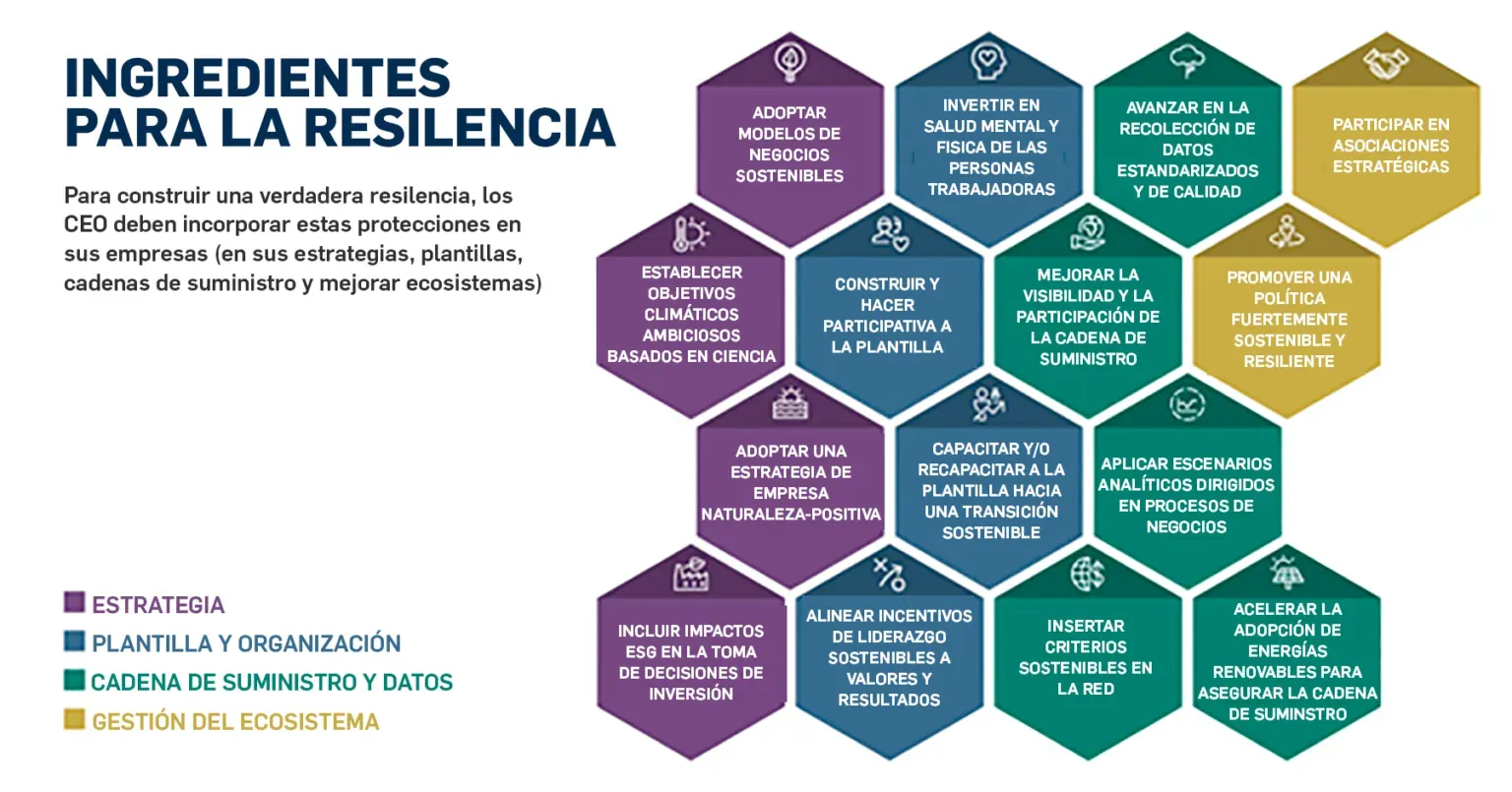
In their interviews, the CEOs identify key initiatives to increase business resilience, from setting science-based climate goals and investing in the diversity of their workforce to engaging in cross-industry partnerships on technology solutions, improving the visibility of the supply chain and promoting greater biodiversity. In addition, CEOs continue to call for governments to commit to policy changes1 that prioritize long-term measurable goals such as standardized ESG reporting frameworks, a global carbon market, and incentives for sustainable business models.
"Despite the setbacks, there is room for hope. CEOs surveyed increasingly recognize that they can build credibility and brand value by committing to the Ten Principles and Sustainable Development Goals across their operations, not just because it's the right thing to do, but also because it makes business sense," Ojiambo added.
▶ Access the full study here.